What Causes Sandstorms and Dust Storms?
 📷 Moses Londo · Pexels
✦ Key takeaways
- A sandstorm needs two conditions: strong winds and dry, loose soil lacking vegetation.
- Grains begin to hop (saltation), striking others and releasing them in a chain reaction that lifts dust.
- A haboob is a violent dust storm generated by downdrafts from thunderstorms.
- Fine dust can travel thousands of kilometres across seas and continents.
- The greatest health hazard is the fine particulate matter that reaches the lungs and worsens respiratory disease.
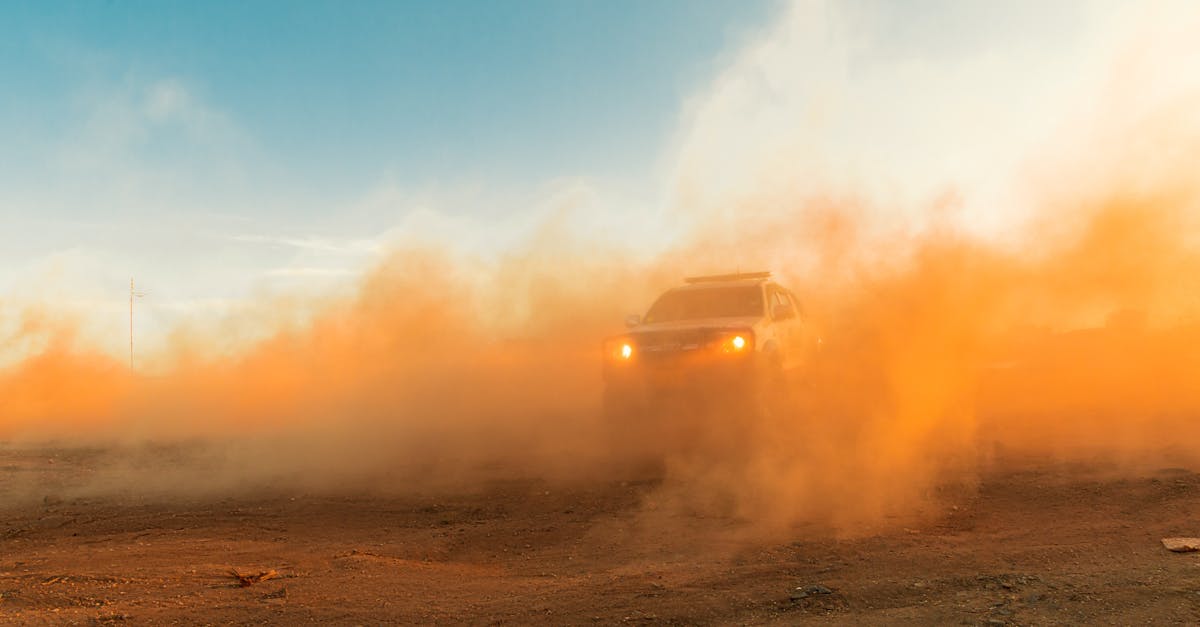
In moments, a clear horizon becomes a towering orange wall creeping toward the city, swallowing buildings and blotting out the sun until day turns to night. The sight of a sandstorm is familiar to the people of the Gulf, Egypt, and North Africa, where it goes by local names. Yet behind this awesome spectacle lies a clear physical mechanism: a sandstorm is not nature's random rage but the inevitable result of strong winds meeting dry, loose soil unprotected by vegetation.
The Two Essential Conditions
For a sand or dust storm to form, two factors must come together. The first is strong, fast winds able to tear grains from the ground; a light breeze will not do, for grains need a wind speed above a certain threshold before they begin to move. The second is dry, loose-grained, crumbly soil, free of the moisture that glues particles together and free of the plants and roots that anchor the earth. This is why storms are common in arid and semi-arid regions, and grow more frequent after long droughts and wherever land has been degraded by overgrazing or the removal of vegetation.
Personal Budget Planner
Plan income & expenses, see your savings rate & 50/30/20 — live charts.
The absence of either condition prevents a storm. Moist soil resists the wind however fierce, because water binds its grains, and weak winds cannot move even the driest sand. When both conditions meet, the show begins.
How Sand Rises: The Secret of Hopping
One might think the wind simply lifts sand upward, but the truth is subtler and more beautiful. Larger, heavier grains do not fly far; instead they roll and then hop short distances near the surface in a motion scientists call saltation. When a hopping grain lands, it strikes other resting grains and flings them into the air in turn, and these strike still others in a chain reaction resembling the spread of a contagion. This successive impact is what shatters the larger grains and releases the very fine dust particles.
The freed fine particles, far lighter, are the ones that rise high and stay suspended in the air, forming the dust cloud that may extend for kilometres in height and width. This is why heavy sand stays close to the ground while fine dust climbs and travels far.
The Haboob: A Giant Wall of Dust
Among the most violent dust storms is the haboob, from the Arabic word for 'blowing'. A haboob forms when a thunderstorm generates a powerful downdraft; when this current strikes the ground it spreads horizontally in all directions at great speed, driving before it a front of dust in the form of a coherent wall that sometimes rises a kilometre or more. The haboob is fast and sudden, often preceding the rain from the same thunderstorm. It is common in Sudan, Egypt, Arabia, and the southwestern United States.
The Journey of Dust Across Continents
Sandstorms do not stay confined to their birthplace. Fine suspended dust can be carried by upper-atmospheric currents across enormous distances, crossing seas and continents. Saharan dust, for example, regularly crosses the Atlantic to reach the Americas and may reach the Amazon basin, carrying minerals that fertilise the soil. Dust from Arabia and Iraq crosses toward the Gulf and sometimes South Asia. These journeys link distant environments, so what is stripped from one desert may nourish a forest on the other side of the planet, though it also carries pollution and fine contaminants.
Table: Storm Levels and Their Impact
| Level | Visibility | Impact |
|---|---|---|
| Light dust | Several kilometres | Minor nuisance, hazy sky |
| Dust storm | Under one kilometre | Difficult driving, respiratory irritation |
| Haboob / severe storm | A few metres | Traffic halts, direct breathing hazard |
Effects on Health and Safety
The greatest danger of sandstorms to humans is not the large grains but the fine suspended particles, especially those smaller than ten micrometres (PM10) and down to 2.5 micrometres (PM2.5). These particles bypass the defences of the nose and throat and reach deep into the lungs, worsening asthma and chronic obstructive pulmonary disease, irritating the eyes and sinuses, and sometimes carrying germs, fungi, and metals. The risk is greater for children, the elderly, and those with respiratory and heart conditions. As for safety, visibility on roads collapses and accidents occur, flights are disrupted, crops may be damaged, and roads buried under sand.
How to Stay Safe
Protection from a sandstorm begins with following weather alerts and staying indoors as much as possible while it blows. Close windows and doors tightly, and run air filters if available. When going out is unavoidable, a mask that blocks fine particles (such as N95) is far better than a mere cloth, and goggles protect the eyes. Drivers should pull over safely away from the roadway and turn off tail lights when visibility fails, to avoid collisions. Those with respiratory illness should keep their medication ready and stay in clean-air surroundings.
In the long term, storm sources are fought by stabilising soil through afforestation and windbreak tree belts, protecting vegetation from overgrazing, and managing water wisely to prevent desertification. These environmental solutions treat the root of the problem rather than its symptoms.
Conclusion
A sandstorm is a simple equation with an awesome result: strong wind plus dry, loose soil equals a wall of dust creeping over the horizon. It begins with grains hopping in a chain reaction, intensifies when thunderstorm currents drive it, and then its finest dust travels across continents. While it is a natural part of the Earth's cycle, understanding its causes lets us protect our health and safety, and address the desertification that makes it fiercer.