The Voynich Manuscript: The Book No One Has Been Able to Read for Six Centuries
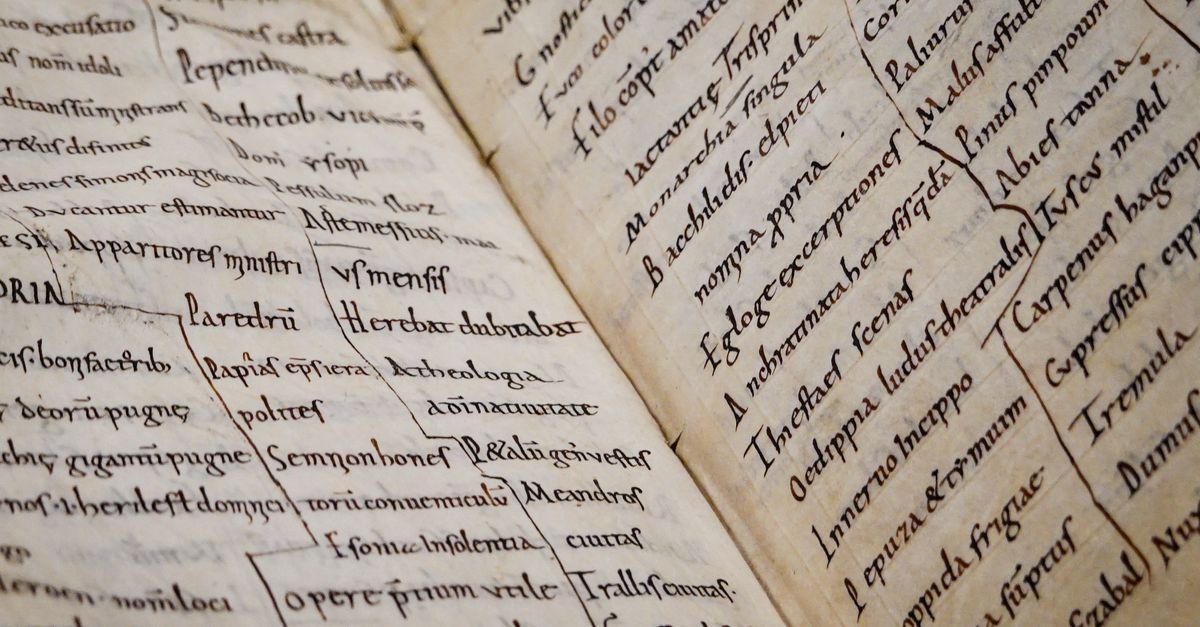 📷 Magda Ehlers · Pexels
✦ Key takeaways
- The Voynich manuscript is a 15th-century book written in an unknown writing system.
- It's full of drawings of strange plants, astronomical shapes, and figures whose meaning we don't know.
- Cipher experts and linguists have tried to crack it for decades with no confirmed success.
- Three theories contend over it: a real language, a cipher, or a meaningless hoax.
Imagine a book in your hands, written in an elegant, skilled hand, its pages adorned with fine colored drawings. You open it to read, only to discover you can't decipher a single letter — not because it's a foreign language you know, but because it's in a writing system unlike any language humans have known. This is the Voynich manuscript, one of the deepest mysteries of written history. For over six centuries, the sharpest minds have stood before it — from wartime codebreakers to linguists and computers — and all returned empty-handed. So what is the secret of this book that refuses to be read?
What is the Voynich manuscript?
It's a handwritten book dated to roughly the early 15th century, according to scientific analysis of the age of its vellum (the skin it was written on). It's named after the book dealer 'Wilfrid Voynich' who obtained it in the early 20th century and drew attention to it. It spans about two hundred pages, written in a smooth, consistent hand suggesting its writer was fluent and at ease, not a translator pondering each letter. But the problem is that the alphabet itself is unknown: symbols and letters matching no known writing system in the world, in Europe or beyond.
Money Snapshot
See where your money stands in seconds: 50/30/20 split, savings rate & emergency-fund months — free.
What's inside? Drawings that deepen the puzzle
If the text alone were mysterious, it would be simpler, but the manuscript's drawings add a deeper layer of riddle. The pages are full of detailed drawings divided into seemingly thematic sections: one depicts strange plants, most matching no known real plant; one has astronomical shapes, circles, stars, and zodiac signs; one depicts small human figures in tubes and pools of water in a baffling way; and one looks like recipes or lists. These drawings suggest the book may be about medicine, botany, or astronomy, but without being able to read the text, they remain mere guesses raising more questions than they answer.
Decades of attempts to crack the code
The riddle wasn't only for the curious; professionals took it on. Military codebreakers, some of whom worked on breaking ciphers in the two world wars, tried to defeat the Voynich manuscript — and failed. In modern times, computers and statistical language analysis were aimed at it; these analyses revealed something striking: the text carries a structure somewhat resembling a real language — some 'words' recur, and the symbols distribute in patterns not entirely random as expected from gibberish written arbitrarily. This exactly is what makes the riddle deeper: the book behaves as if it's saying something, but doesn't reveal it.
Three theories contend over the answer
Attempts to explain the manuscript revolve around three main hypotheses. The first is that it's written in a real unknown or extinct language, perhaps a rare dialect written in an invented alphabet whose key was lost with its people. The second is that it's a ciphered text; a book in a known language but written in a complex cipher to hide its content — perhaps medical or religious secrets its owner wanted to protect. The third, most controversial, is that it's an elaborate hoax; a book with no real meaning, made by someone in its time to sell as a rare artifact or precious magical manuscript, filled with symbols that look meaningful but are empty. Each hypothesis has its supporters and arguments, and none has yet been settled.
Why is the riddle so hard to settle?
You might wonder: with all these minds and technologies, why hasn't the riddle been solved? The reason is that cracking an unknown writing system usually needs a 'Rosetta Stone' — a parallel text in a known language that opens the door, as Egyptian hieroglyphs were cracked. But the Voynich manuscript is alone; there's no other text in the same system to compare it to. And if it's a meaningless hoax, it's impossible to 'solve' because it simply carries no message. This double possibility — either a riddle with no key, or no riddle at all — is what makes the manuscript a tight intellectual trap that has baffled generations.
A magic that never fades
Whether the Voynich manuscript is a lost language, a genius cipher, or a clever hoax, it keeps captivating the imagination for a deep human reason: we are meaning-seeking creatures, and the existence of a text that waves meaning at us and withholds it stirs an unquenchable curiosity in us. It's a mirror reflecting our desire to decode the unknown, and humbly reminds us that there are things humans themselves made that we still can't understand. Perhaps a day will come when a researcher or computer reveals its final secret — or perhaps the manuscript will keep its silence forever, remaining a witness that some riddles are stronger than all attempts to crack them.