The Bronze Age Collapse: How Whole Civilizations Fell Around 1200 BC
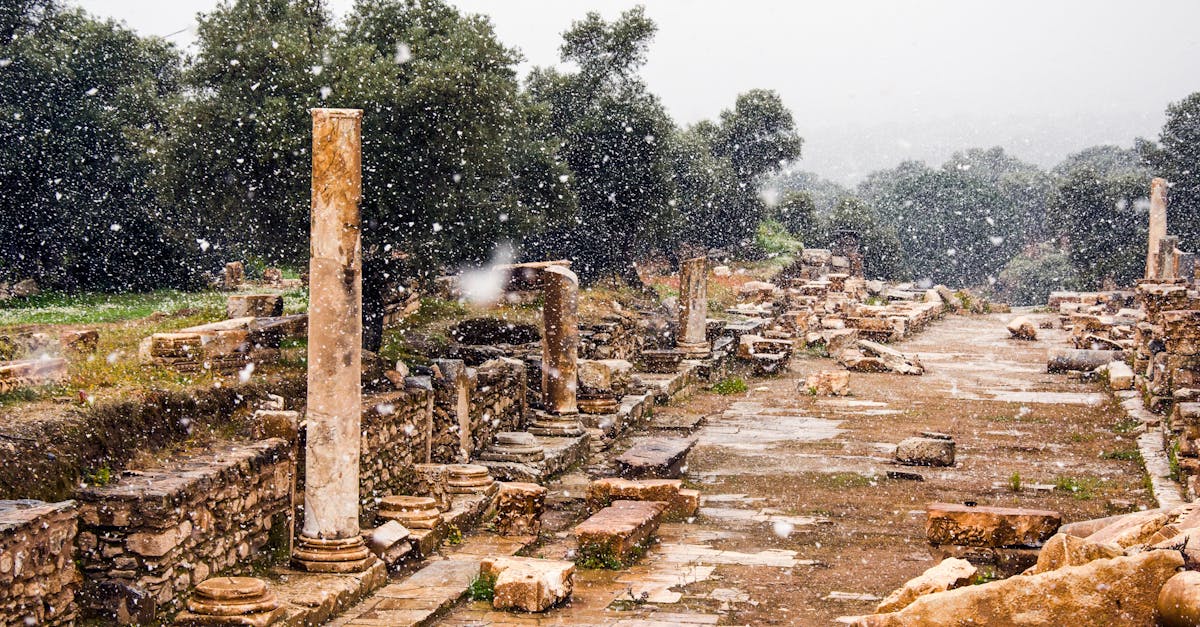 📷 muhammed diler · Pexels
✦ Key takeaways
- Around 1200 BC an interconnected web of eastern Mediterranean civilizations collapsed within a few decades.
- The Hittite Empire fell, Mycenaean cities burned, Egypt was battered, and whole scripts and languages were lost.
- There is no single cause; historians favor a 'perfect storm' of drought, earthquakes, war, and trade breakdown.
- The collapse offers a modern lesson about how fragile complex, interdependent systems become when shocks coincide.
Picture a connected, humming world: ships laden with copper, tin, oil, and ivory crossing the Mediterranean; kings exchanging letters, gifts, and marriages; fortified cities teeming with scribes, artisans, and soldiers. This was the Near East at the height of the Late Bronze Age, when Egypt, the Hittites, the Mycenaeans, and the kingdoms of the Levant formed a single civilizational web. Then, within a few decades around 1200 BC, almost all of it collapsed.
Cities burned one after another, trade halted, written languages vanished, and empires that had seemed eternal fell. This was no slow decline but one of the most violent collapses in human history — a collapse that plunged the region into 'dark ages' lasting centuries. So what happened?
Money Snapshot
See where your money stands in seconds: 50/30/20 split, savings rate & emergency-fund months — free.
An Interconnected World
To grasp the scale of the disaster, you must understand how tightly interwoven that world was. The great civilizations depended on one another profoundly. Bronze itself — the metal that named the age — is an alloy of copper and tin, and tin was rare, hauled from distant regions along long trade routes. Any disruption to that network meant shortages of weapons, tools, and the entire economic scaffolding.
Archives such as the Amarna letters in Egypt and the tablets of the city of Ugarit on the Syrian coast reveal an intricate diplomacy among royal 'brothers.' The Mycenaeans in Greece controlled administrative palaces like Mycenae and Pylos; the Hittites ruled a sprawling empire in Anatolia; and pharaonic Egypt projected power to the north and south. The system was magnificent, but also brittle: so interconnected that the fall of a single link could drag down the rest.
A Chain of Destruction
The evidence of ruin is physical and shocking. Layers of ash blanket the remains of great cities such as Ugarit, Hattusa (the Hittite capital), Mycenae, and Tiryns. The Mycenaean script known as Linear B disappeared entirely, and with it the ability to keep records. The Hittite Empire fell and fragmented, and Egypt survived only battered after ferocious battles.
Among the most famous evidence are the inscriptions of Pharaoh Ramesses III at the temple of Medinet Habu, describing waves of invaders the Egyptians called the 'Sea Peoples.' The inscriptions claim that 'no land could stand before their arms,' and that they swept over the Hittites, Cyprus, and the Levant before crashing against Egypt's borders. But who exactly were the Sea Peoples, and where did they come from? That remains one of the thorniest riddles of ancient history.
The Riddle of the 'Sea Peoples'
For a long time the Sea Peoples alone were blamed for the collapse, as if mysterious hordes had swept over the ancient world like a hurricane. The image is seductive but far too simple. Many historians today see the Sea Peoples as much a result of the collapse as a cause of it: bands of refugees, fighters, and migrants uprooted by a larger crisis, turned into a destabilizing force.
In other words, the devastation may not have come from an organized foreign invasion, but from a chain of internal collapses that pushed populations into motion and chaos. When trade fails and food grows scarce, the farmer becomes a raider and the prosperous city becomes prey. The Sea Peoples, then, look more like a symptom of the disease than the disease itself.
A Perfect Storm of Causes
The modern scholarly consensus, summarized by historian Eric Cline in his book '1177 BC: The Year Civilization Collapsed,' is that there was no single cause. Instead, multiple shocks converged within a narrow window until they overwhelmed the system's capacity to endure. First came climate change: studies of pollen and lake sediments in the region point to a long, harsh drought that struck the eastern Mediterranean, causing famines documented in letters begging for grain.
Second came seismic activity; some archaeologists argue that a series of violent earthquakes — an 'earthquake storm' — hit the region in that era, toppling walls and palaces. Third came wars, internal unrest, and possible social revolts against ruling elites who had monopolized wealth. And fourth, most important: the fragility of interconnection itself. When trade broke down, the entire bronze economy collapsed, the palace bureaucracies that ran everything fell, and the interlocking links toppled like dominoes.
What Remained After the Collapse?
The collapse was not the end of the world, but it reshaped it. Greece sank into a 'dark age' during which writing was forgotten for centuries, before classical Greek civilization was later born from the ashes. Out of the chaos rose new peoples and cities, among them the merchant Phoenicians, who spread their alphabet — the ancestor of our letters today — across the Mediterranean. And the Iron Age replaced the Bronze, partly because the severed tin routes made locally available iron a practical alternative.
In this sense, the collapse was destruction and birth at once. Great civilizations were wiped from existence, yet the map that emerged afterward paved the way for new worlds that were more resilient and more diverse.
A Lesson Beyond Its Time
The Bronze Age collapse fascinates us because it resembles us. Our world today is interlinked through global supply chains, entangled markets, and technologies that depend on one another — just like the Bronze Age world. And the lesson of 1200 BC is blunt: complex, interconnected systems deliver enormous prosperity, but they can become dangerously fragile when several shocks strike at once — drought, natural disaster, and economic disruption together. That world did not fall to a single blow, but to an accumulation of blows it could no longer absorb.
Sources
This article draws on Encyclopædia Britannica entries on the Bronze Age, the Hittites, and Mycenaean civilization; on historian Eric Cline's book '1177 BC: The Year Civilization Collapsed' as covered by Smithsonian Magazine; and on BBC reporting on the Sea Peoples and evidence of ancient drought.