The Challenger Disaster: A Rubber Ring That Felled a Nation's Dream
 📷 Pixabay · Pexels
✦ Key takeaways
- Space shuttle Challenger broke apart 73 seconds after its launch on 28 January 1986, killing all seven crew members.
- The direct cause was the failure of a rubber sealing ring in one of the booster rockets due to extreme cold.
- Engineers had warned of the danger the night before launch, but schedule pressure overrode their warnings.
- The disaster transformed NASA's safety culture and became a symbol of the danger of ignoring engineering alarms.
On a cold morning in January 1986, millions of Americans gathered before their television screens, many of them schoolchildren, to watch a historic moment: the launch of space shuttle Challenger carrying an ordinary teacher named Christa McAuliffe, the first civilian chosen to fly to space under the 'Teacher in Space' program. She was meant to deliver lessons from orbit broadcast into school classrooms. Imagine the excitement of her students as they watched their teacher climb toward the stars.
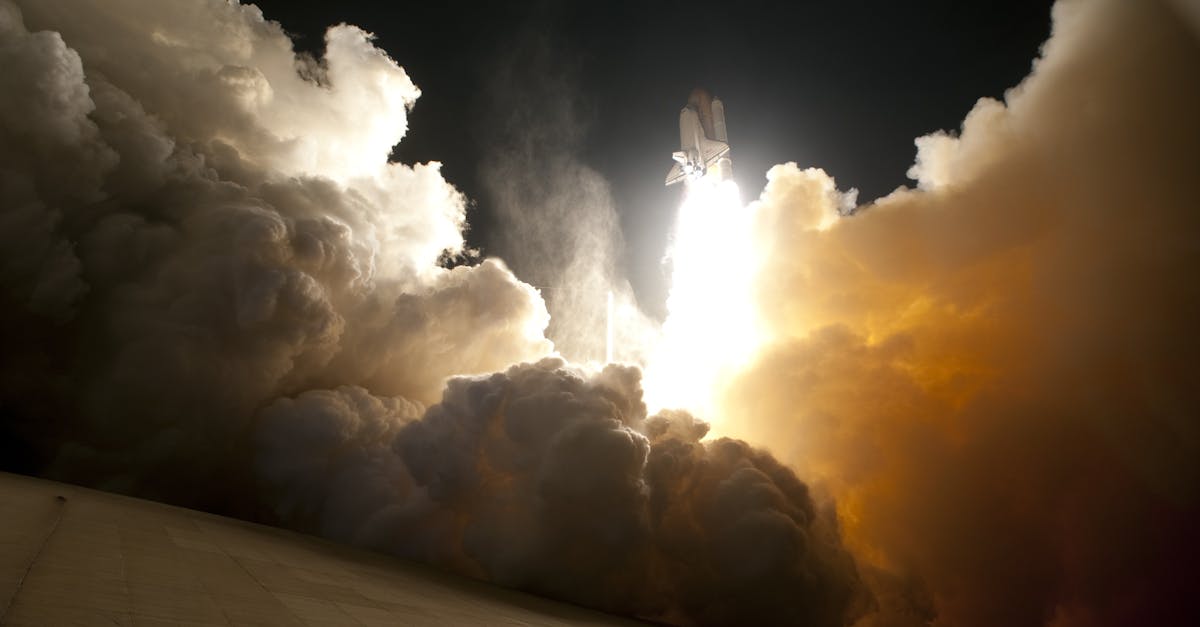
Just seventy-three seconds after liftoff, the excitement turned to silent shock. The shuttle vanished into a branching white cloud in the sky, a heavy silence fell, and then everyone realized something terrible had happened. But the harder truth is that this disaster was not an unforeseeable accident, but the result of a warning that was written and spoken and never heard.
Money Snapshot
See where your money stands in seconds: 50/30/20 split, savings rate & emergency-fund months — free.
Seventy Seconds to Catastrophe
Let us return to those decisive seconds. At liftoff everything appeared normal on the surface. But from the earliest moments, before the vehicle had even cleared the launch pad, a thin trail of black smoke had escaped from a point on one of the solid rocket boosters, a sign no one recognized at the time as the beginning of the end.
During ascent, as the vehicle shook through strong wind shear, the hidden leak grew into a tongue of flame issuing from the side of the booster, licking at the huge external fuel tank. At the seventy-third second, the tank collapsed and released vast amounts of liquid hydrogen and oxygen, and the entire vehicle broke apart under violent aerodynamic forces. What people saw was not an 'explosion' in the strict sense, but a rapid tearing of the vehicle in the airstream.
The Rubber Ring the Cold Betrayed
What was leaking from the booster in the first place? The answer is astonishing in its tragic simplicity. Each solid rocket was made of assembled segments, and the joints between them were sealed by rubber rings called O-rings, whose job was to prevent hot, high-pressure gases from escaping through the seams.
The problem is that rubber loses its elasticity when it grows cold. On the morning of that launch, the temperature was unusually low, near freezing, colder than any previous launch. The rings stiffened and could no longer expand fast enough to fill the gap and seal it at the instant the rocket ignited. The burning gases leaked through the gap, and the tongue of flame that destroyed the vehicle was born. Quite literally, the shuttle was failed by a rubber ring too small for anyone to imagine as lethal.
The Night Before the Launch
Here lies the most painful part of the story. The failure of the rings was not a complete surprise. On the night before the launch, engineers at the company that built the boosters held an emergency meeting and warned explicitly that the severe cold might keep the rings from sealing. They asked for the launch to be postponed until temperatures rose.
But the pressures were immense: a delayed schedule, enormous media attention because of the teacher on board, and a managerial desire to avoid further postponements. In a climate of urgency, the engineering objection gave way to the decision to proceed. That moment later became a case study in engineering ethics and risk management, an example of how the voice of warning is buried under the pressure of deadlines and public image.
Seven Names Not to Be Forgotten
Aboard Challenger were not numbers but seven human beings, each with a story. There was commander Francis Scobee, pilot Michael Smith, three mission specialists Ronald McNair, Ellison Onizuka, and Judith Resnik, payload specialist Gregory Jarvis, and teacher Christa McAuliffe. They embodied America's diversity and ambition, from a scientist to a teacher to a military pilot.
Investigations later revealed a painful truth: the crew cabin most likely remained relatively intact after the vehicle broke apart, and some crew members may have stayed conscious part of the way down before the cabin struck the ocean surface. This detail, however harsh, reminded everyone that behind the distant television image were people of flesh and blood.
The Commission and a Simple Physics Lesson
The American government formed an investigative commission that included prominent experts, among them the famous physicist Richard Feynman. In a moment that became legendary, Feynman performed before the cameras an experiment shockingly simple: he dipped a piece of O-ring rubber into a glass of ice water, then showed how it lost its elasticity and did not spring back quickly. In minutes, he explained to the public the essence of what had destroyed a multibillion-dollar vehicle.
But the commission did not stop at the technical cause. It went deeper to expose a flaw in NASA's institutional culture, where the repeated occurrence of small O-ring problems without disaster was wrongly read as evidence of safety rather than an accumulating warning. Researchers later named this pattern the 'normalization of deviance': when a recurring danger becomes a familiar, accepted matter, until the irreversible occurs.
What Challenger Left Behind
The disaster halted the shuttle program for about two and a half years, the boosters were redesigned, and most importantly it reshaped how NASA thinks about safety. Engineers were encouraged to raise their voices, the launch decision was subjected to more rigorous reviews, and the word 'no' was given a weight it had not carried before.
Yet the lesson was, sadly, not fully mastered. Seventeen years later, NASA lost another shuttle, Columbia, in 2003, for technically different but culturally similar reasons: a known danger that was downplayed. This proved that the normalization of deviance is a stubborn enemy that returns whenever vigilance relaxes, and that a safety culture is not an achievement won once but a permanent battle against false reassurance.
Challenger remains a lesson that reaches beyond space into every field where danger is managed: that the most dangerous thing facing any organization is not ignorance of a problem, but knowing it and looking away under the pressure of time or image. Seventy seconds of ascent, one small rubber ring, and a night of buried warnings converged to remind humanity that technical brilliance without humility before risk can lead to the very catastrophe it seeks to avoid.
Sources
NASA (reports on mission STS-51-L); the official Rogers Commission report; Encyclopaedia Britannica; the BBC and press archives from 1986.