Why Do We Feel We've Lived This Moment Before? The Secret of Déjà Vu
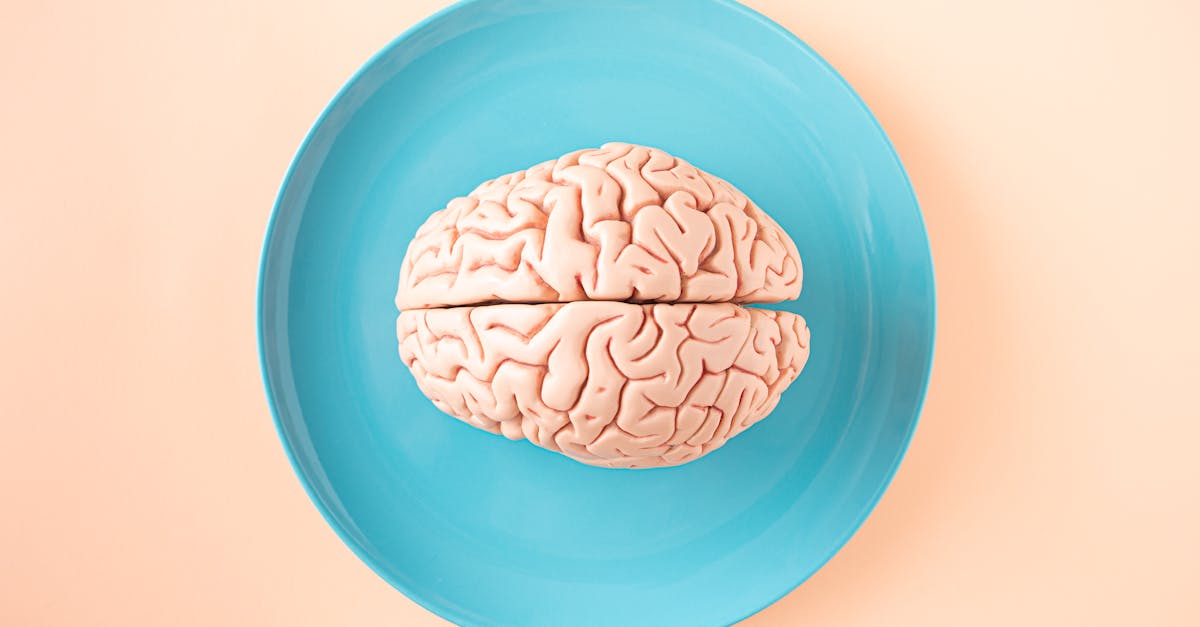 📷 Amel Uzunovic · Pexels
✦ Key takeaways
- Déjà vu is the feeling that a new situation is familiar even though you know you haven't lived it — a normal, common experience.
- The likeliest explanations frame it as a small, momentary glitch in the memory system, not a window onto the future or past.
- A strong hypothesis: a brain region fires a 'familiar' signal by mistake, with no real memory behind it.
- It's common in the young and fades with age, and rises with fatigue and travel — supporting that it's an ordinary mental phenomenon.
- Your brain correcting itself in the moment ('I know this is impossible') shows its monitoring system is working well.
Let me describe a moment you have surely lived. You walk into a café you've never visited, or down an unfamiliar street in a new city, or sit in a passing conversation with people you've never met, and suddenly a dense feeling storms over you that all of this happened before: the same arrangement, the same words, the same light. It lasts a few seconds then evaporates, leaving you with wonder mixed with confusion. This is déjà vu, a French phrase meaning literally 'already seen.' And the question almost everyone asks: how can I feel I've lived a moment I know for certain I have never lived?
Before diving into explanations, let's settle a reassuring point: déjà vu is a completely normal and very common experience; most healthy people go through it now and then, and it is not in itself a disease or a worrying malfunction. The strangeness we feel doesn't mean something is wrong; on the contrary, as we'll see, it may be a sign that your mind is monitoring itself well. Intriguingly, scientists found the phenomenon very hard to study, for a simple reason: it comes on suddenly, lasts seconds, and can't be summoned in a lab on demand. Even so, over recent decades enough evidence has gathered to sketch the strongest likely picture.
Personal Budget Planner
Plan income & expenses, see your savings rate & 50/30/20 — live charts.
What exactly distinguishes déjà vu?
To understand it, we must define it precisely. Déjà vu isn't merely a place reminding you of another place you really saw; that's ordinary remembering. The essential difference is that déjà vu carries an internal contradiction: a strong sense of familiarity collides with your certain knowledge that the situation is entirely new. You feel 'I know this' and 'I know I don't know this' in the same instant. That collision is déjà vu's signature, and it's what makes it both baffling and delightful. This is why researchers describe it as 'familiarity without a source': a 'this is familiar' signal fired in your brain, but with no real memory standing behind it.
Theories competing to explain it
Because the phenomenon resists measurement, scientific hypotheses have multiplied, each with its own logic and evidence. The table below sums up the leading ones:
| Theory | The idea in brief | What supports it |
|---|---|---|
| Familiarity-signal glitch | The brain region for 'familiar' fires its signal by mistake | Recordings in temporal-lobe epilepsy link the region to déjà vu |
| Dual processing | A slight delay between two perception pathways makes the present feel like a memory | Explains the sense of 'living twice' in one moment |
| Hidden similarity | The scene resembles a forgotten old memory, so its familiarity is recalled without details | Lab experiments with similar scenes triggered the feeling |
| Memory self-check | The brain tests its memory system and catches a 'false alarm,' then corrects it | Explains why we instantly know the feeling is wrong |
Note that these theories don't necessarily cancel one another; déjà vu may be an umbrella over more than one mechanism. But their common thread is decisive: none of them needs a supernatural explanation. No foretelling the future, no recall of a past life, no cryptic message. All are explanations that turn within the boundaries of the brain and its memory system — and that in itself is a reassuring and beautiful discovery.
What do we learn from the diseased brain?
One of the most curious sources of our knowledge of déjà vu is epilepsy patients whose seizures start in the temporal lobe — the region near the memory and familiarity centers. Many of them feel a strong wave of déjà vu just before a seizure, as if it were a warning. When doctors monitored the electrical activity in their brains, they noticed that stimulating certain areas could artificially summon the déjà vu sensation. This observation is precious: it ties the mysterious phenomenon to a specific physical place in the brain and confirms that what we feel is not magic but electricity and cells. Of course, déjà vu in healthy people differs from patients' seizures, but it opens a window onto the same mechanism working quietly in all our heads.
Why is it common in the young and fades with age?
One of the clearest facts studies have recorded is that déjà vu is more common among teenagers and young adults, then its episodes gradually decline with age. This observation alone topples many supernatural explanations; if déjà vu were a past-life memory or a prophecy, it wouldn't be tied to age this way. More likely it relates to the vitality of the memory system and its processing speed, and to the young brain's ability to catch its own small errors and correct them fast. Déjà vu also rises with fatigue, sleep deprivation, and travel to many new places — all conditions that strain the perception and memory system, raising the odds of a 'false alarm.' This consistency with known factors strengthens the calm scientific picture of the phenomenon.
Why should this matter to you?
You might ask: what's the value of understanding a fleeting feeling that lasts seconds? The value is greater than you think. Déjà vu is a rare window onto how your mind builds our sense of reality and time. In every moment, your brain doesn't merely record what happens; it evaluates it: is this new or known? Have I seen it before or not? This evaluation runs automatically and with astonishing smoothness all day, so much that we never notice it. Déjà vu is the rare moment when this system 'stumbles' a little and reveals itself for seconds. Better still, your immediate sense that 'this doesn't make sense' means another system in your brain — the monitoring and checking system — is working efficiently, catching the error and correcting it on the spot. In other words, déjà vu isn't evidence of a fault in your mind; it may be evidence that its self-oversight is sound and alert.
When does déjà vu deserve medical attention?
The passing déjà vu that visits you now and then and leaves no trace is the normal picture, needing no worry at all. But there are rare cases worth consulting a doctor about: déjà vu that recurs intensely and at a very high frequency, or that comes with a brief loss of awareness, staring and blanking out, involuntary movements, phantom smells or sounds, or confusion afterward. These may be signs of small temporal-lobe seizures that deserve evaluation. But the fleeting flicker you instantly recognize as just a strange feeling and then forget is a natural part of being a human with a living memory. The rule: isolated déjà vu is one thing; déjà vu accompanied by neurological symptoms is another, worth checking.
In the end, when that feeling ambushes you again in a place you've never visited, don't look for a past life or a message from the unseen. Pause a moment and smile: you've just caught your mind in the act of working, and seen with your own eyes how it manufactures your sense of time and familiarity. It isn't a fault in the machine, but a rare flicker revealing how magnificent that machine you carry between your ears truly is.